
Made in Vienna 🇦🇹
Follow us

Copyright © 2025-2026 Tretina.co

A practical guide to website design for startups: what to prioritize, what to skip, and why your homepage isn't as clever as you think it is.
May 3, 2026 by Alexey Tretina
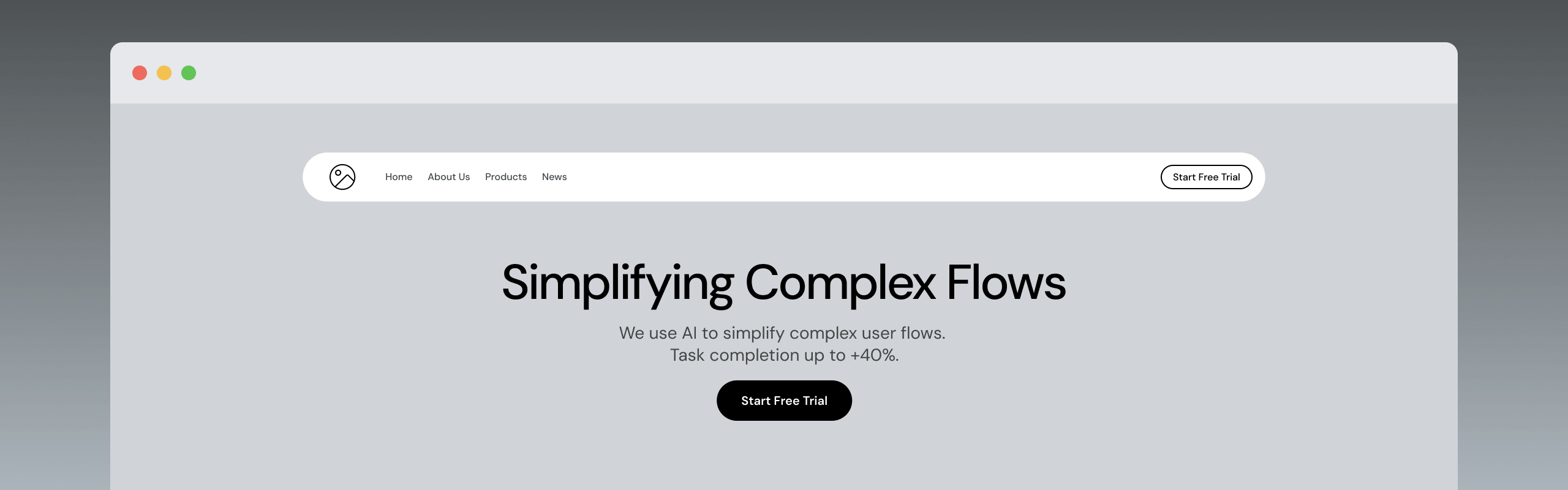
Every startup founder I've ever worked with has said some version of the same thing: "We'll fix the website later, once we have some traction."
I used to agree politely, but I don't anymore. After 15 years in UI/UX design, working with everyone from one-person startups to companies with hundreds of employees, I've seen this story play out more times than I'd like to count. The website gets deprioritized, then neglected, then one day a potential investor visits and the first impression is a half-finished Webflow page with placeholder text that still says "Lorem ipsum." True story.
Website design for startups is not about having the most beautiful site on the internet. It's about not shooting yourself in the foot before conversion even starts. This guide is what I wish someone had handed me and what I now hand to every startup that walks through our door.
Let me ask you something. When you meet someone at a conference and they mention a startup you've never heard of, what's the first thing you do? You Google their website. Then usually you spend about eight seconds on their homepage and form an opinion. Those eight seconds – that's when it's being decided if your website design working or failing.
For startups, this matters even more than for established companies. You don't have a famous brand name doing the heavy lifting. You don't have ten years of Google reviews. All you have is whatever your site communicates in those first few seconds: who you are, what you do, and why I should care.
Good website design for startups answers these three questions immediately. Not after the user scrolls. Not after they click "About Us." Immediately, on the first screen they see. I once reviewed a startup's homepage where the headline read: "Empowering tomorrow's solutions through synergetic innovation." I read it three times. I still had no idea what they sold. When I asked the founder, he said it was a project management tool for construction companies. I gently suggested they try with the headline again.
There's a romantic idea in the startup world that a complex website signals ambition. More features listed = more impressive product. More pages = more serious company. But the truth is, it is backwards. The most effective startup websites I've seen are almost uncomfortably simple. One clear headline and one subheadline that explains it. One CTA button. Done. The reason Apple's marketing looks the way it does isn't because they ran out of ideas. It's because they understand that every extra element on a page competes for the user's attention.
When I started my career in design, I made the classic mistake of trying to put everything on the homepage: every feature, every use case, every testimonial. I was convinced that if I showed more, users would see more value. Instead, they saw noise. They clicked away faster. The more I added, the worse it performed.
Less is genuinely more. For a startup especially, where your product might still be evolving, a simple website is also much easier to update. You want to be able to change your positioning on a Tuesday afternoon without rebuilding half your site. That's why the exercise I give to every startup: can you explain what your product does in one sentence that a 10-year-old would understand? If yes, that sentence is your headline. If no, go back to the whiteboard before you touch any design tool or hire a designer.
Here's something that will make your developers happy: a lot of website performance problems are caused by designers. Massive hero images, autoplay videos, heavy animations, custom fonts loaded from six different sources. Every one of these is a design decision that slows your site down. And a slow site is a leaky bucket – you can pour all the traffic in the world into it and it drains right out.
Google's research shows that as page load time goes from 1 second to 3 seconds, bounce rate increases by 32%. From 1 second to 6 seconds, it jumps 106%. However, many "cool" designers use these long loaders for their amazing creations. Your startup doesn't have the brand equity to survive a slow website. Users will leave and they will not feel bad about it.
Website design for startups has to treat performance as a first-class concern from the very beginning, not something you optimize after launch when you notice people are leaving. Tell your designer to compress images, use system fonts where possible, and keep animations subtle and purposeful. Ask your developer to show you the Lighthouse score before you call a page done. This isn't about being boring, it's about respecting your users' time.
I'll be very honest with you: I am a designer who has spent years caring deeply about aesthetics. So it's a little painful for me to say this, though it's true. For startups, trust signals matter more than visual polish.
Why so? Because nobody knows you yet. When a user lands on your site, they're quietly asking: "Is this a real company? Should I give these people my email address? My credit card?" Your design needs to answer that question before it does anything else. And what builds trust best of all? Real things. A real address or location. Real photos of the team (not cheesy office people stock photos). Real customer logos, even if it's just three companies. Real testimonials with full names and job titles, not just "John Doe, CEO."
One of our clients had a beautifully designed startup website – gorgeous typography, stunning illustrations that made me jealous. And their conversion rate was terrible. We added a small "Trusted by" section with five company logos, changed their testimonials from anonymous to named, and added a low-quality team photo. Conversions went up 30% in the first month. They were annoyed that something so mundane worked better than all the pretty visuals. I understood the feeling more than anyone.
This is the one I have to say out loud the most often, because it gets ignored the most often. Founders have a very specific audience in mind when they're building their website: investors, or sometimes their co-founders, or sometimes even themselves. These all are the wrong audience.
Your startup's website is not a pitch deck. It's not a place to show that you understand the market and have thought about the competitive landscape and have a GTM strategy. Those things matter, but in a pitch meeting. On your website, the only person who matters is your customer. So before you write a single word of copy or pick a single color, ask yourself: who actually visits this website? What are they trying to figure out? What would make them take the next step?
If you're a B2B SaaS startup, your visitor is probably a manager trying to solve a specific problem. They want to know quickly: does this solve my problem, what does it cost, and can I trust this company. Design for that.
If you're a B2C startup, your visitor might be comparing you to three alternatives and has seventeen tabs open. They're busy and a little overwhelmed. Make it stupidly easy to understand your value in five seconds.
The best website design for startups is always, always user-centered. Not founder-centered. Not investor-centered.
I run a design agency, so I obviously have an opinion here. But I'll try to be honest rather than just helpful to my own business. You can DIY your first website if you're at the very beginning, still validating the idea. Use Webflow, Framer, Wix or Squarespace. Pick a clean template. Keep it simple. Don't spend $20,000 on a custom design when you don't know yet if anyone wants your product.
But there are moments when investing in professional website design for your startup stops being a luxury and starts being a necessity:
Before you launch. The first real version of your product deserves a real website. Not a template with your logo slapped on it.
Before a fundraising round. Investors will visit your website. They will form opinions. Make those opinions good.
When your conversion rate isn't growing. If you're getting traffic but nobody is converting, something is wrong with the design or the copy. That's worth fixing with professional help.
When your product has outgrown your website. Your product evolves and your positioning clarifies. At some point the website you built eighteen months ago is actively misrepresenting what you do. That could become a problem.
The rule I give founders: think of your website the same way you think about your product. You wouldn't ship the same version of your product for two years without updating it. Don't do that to your website either.
If I had to distill everything above into a single sentence it would be this: website design for startups is about communication, not decoration.
Every visual choice: the layout, the typography, the colors, the images – everything should serve the goal of communicating clearly and building trust quickly. When decoration gets in the way of communication, cut the decoration. When simplicity helps the user understand faster, embrace simplicity even if it feels boring. You don't need the most beautiful website in your industry. You need the clearest one.
I've been doing this for 15 years. I've made every mistake I've described above, some of them multiple times. The good news is that none of these mistakes are irreversible. The even better news is that you're reading this before you make them.
Now go update that homepage.